
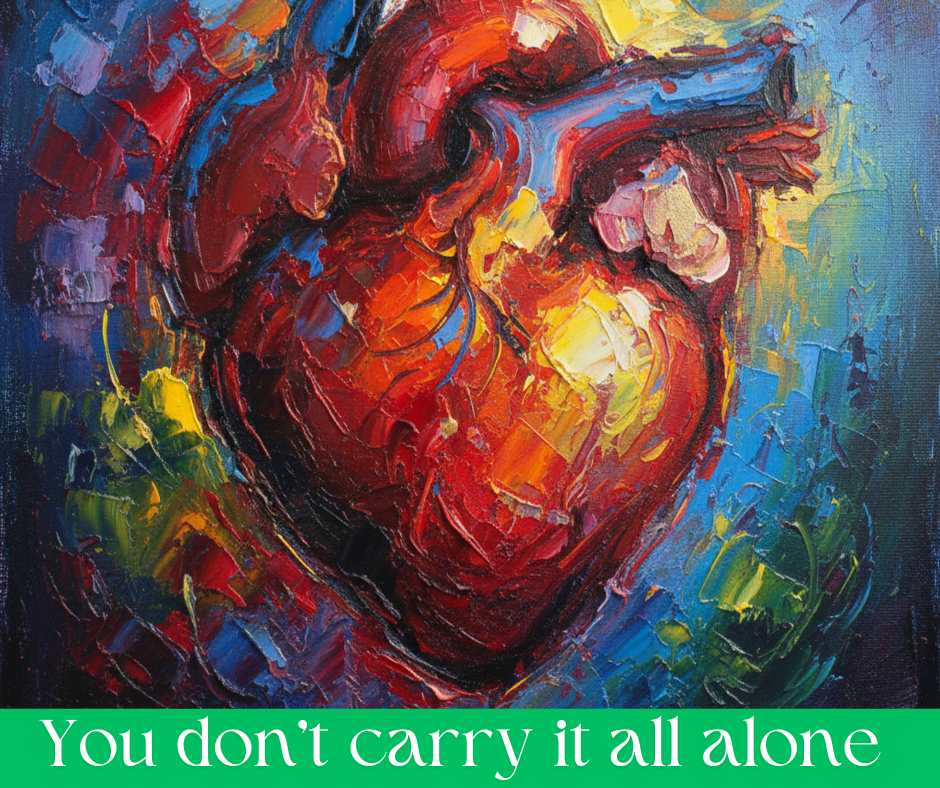
Care for the Heart in Times of Loss
Grief is not a problem to solve, symptoms to fix or escape, nor a process to rush through. Grief is a natural expression of love, attachment, connection, and belonging. In a culture that often urges us to “move on,” grief can become isolated, suppressed, or misunderstood.
Compassionate bereavement therapy offers a different path: one that honors grief as meaningful, relational, and worthy of care.
Grief and loss can be seen as an initiation—a threshold experience that reshapes us, asks us to slow down, and invites us into deeper relationship with life, love, and impermanence.
Rather than asking “How do I get over this?” we gently explore:
- How grief wants to be witnessed and tended to
- What has been lost, reshaped, hidden
- How love & connection continues to move through us
- What meaning and insight may emerge over time
Grief does not end—it changes. Therapy becomes a place to learn how to live in relationship with it.
Compassionate Bereavement and Grief Therapy May Be Supportive if You Are:
- Mourning the death of a loved one
- Experiencing anticipatory grief or ambiguous loss
- Navigating sudden, traumatic, or complicated loss
- Grieving estrangement, separation, or incarceration
- Carrying unacknowledged, ancestral, or “old” grief
- Feeling numb, overwhelmed, or emotionally flooded
- Struggling with meaning, faith, identity, or purpose after loss
A Ritualistic & Ceremonial Approach to Healing
Humans have always used ritual to tend grief—to mark endings, honor the dead, and support the living. In therapy, ritual does not require belief or religion. It is about intention, presence, and meaning-making.
Depending on your comfort and interest, our work may gently include:
- Ritualized moments of remembrance
- Symbolic practices to honor the who or what has been lost
- Creating space to speak the unspeakable
- Working with seasons, cycles, and thresholds
- Guided imagery or meditative practices
- Honoring grief held in the body and nervous system
Compassionate Bereavement Therapy Supports You In:
- Feeling less alone with your grief
- Giving language to emotions that feel overwhelming or confusing
- Regulating grief that feels too intense—or too distant
- Integrating loss into your life without erasing love
- Making space for memory, longing, anger, relief, or guilt
- Reclaiming meaning, connection, and vitality over time
- It’s an opportunity for continuity, integration, and care.
Our Approach Is:
- Trauma-informed, nervous-system aware, and deeply relational
- Evidence-based psychotherapy with somatic awareness, mindfulness, narrative, creative arts therapies, and ceremony/ritual-informed practices
- Paced slowly, guided by safety and consent ~ grief unfolds in its own timing.
- We listen together—to your body, your emotions, your memories, and your story.
- We build a compassionate container for loss – a space where grief is welcomed—not minimized, pathologized, or rushed.
What to Expect in Sessions
Sessions are a space gently designed for honesty, curiosity, and relief. Some days may focus on learning practical therapeutic tools, coping skills, gentle ways to calm the nervous system, more ritual-centered and ceremonial healing; other days may involve deeper emotional processing or collaborative integration.
Honoring grief as a sacred and human response to love and connection.
If you are walking through grief, you do not have to do it alone. We invite you to reach out for compassionate bereavement support—whether your loss is recent, long past, clear, or complicated.